Table of Contents
In the high-stakes world of chemical manufacturing, the goal is always the same: maximum product purity at the lowest possible operational cost. Whether you are processing fine chemicals, pigments, or bulk agrochemicals, the separation stage is where your margins are won or lost.
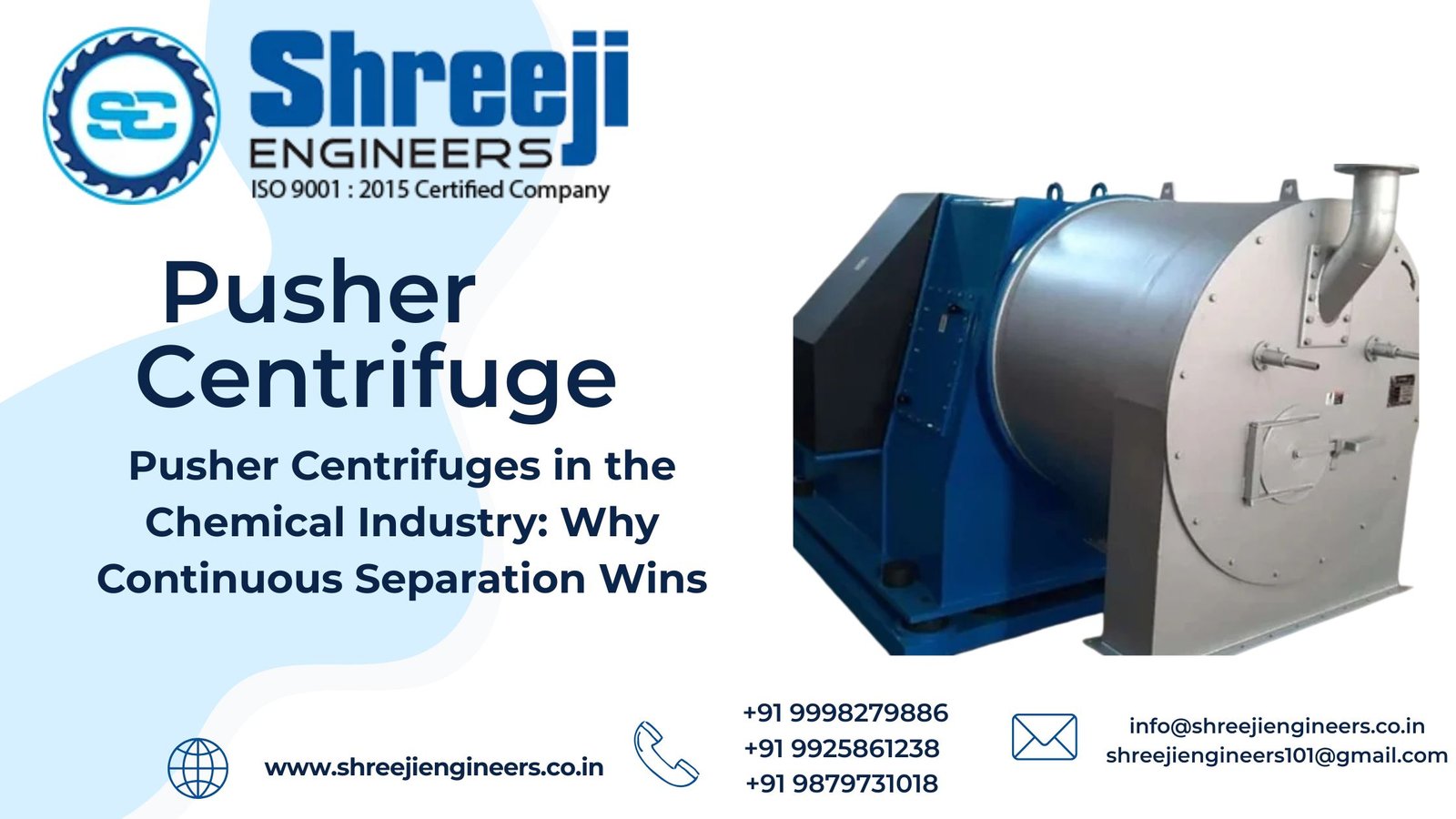
At Shreeji Engineers, we see a clear trend in the industry—chemical plants are rapidly moving away from batch-style filtration in favor of Continuous Pusher Centrifuges. But why is this transition happening, and what makes these machines uniquely suited for chemical applications?
1. The Power of Continuous Throughput
Batch centrifuges require constant starting, stopping, loading, and discharging. This “stop-and-go” motion is not only inefficient but also creates bottlenecks in your production line.
-
The Advantage: A Pusher Centrifuge operates in a steady state. This ensures a consistent flow of material, which is critical for downstream processes like drying or calcination. When your feed is consistent, your drying time is predictable, and your energy costs stay under control.
2. Superior Purity Through Counterflow Washing
In chemical production, removing impurities from the mother liquor is essential to meeting quality standards.
-
The Advantage: Pusher Centrifuges allow for high-efficiency “wash zones.” Because the cake moves continuously across the screen, wash liquid can be applied evenly. This effectively displaces impurities with minimal consumption of wash solvent, giving you a purer end-product without excessive waste.
3. Handling Aggressive and Corrosive Media
The chemical industry often deals with corrosive or abrasive slurries that would destroy a standard, low-grade machine.
-
The Advantage: Pusher Centrifuges for the chemical sector are built with advanced metallurgy. By selecting the correct grade of stainless steel or specialized alloys, we can build machines that resist chemical attack. This ensures the equipment remains structurally sound even when processing harsh acids or caustic substances.
4. Minimal Product Degradation
Some crystalline chemical products are fragile; they can break down if subjected to rough handling or high-impact discharge cycles.
-
The Advantage: The gentle, mechanical “pushing” motion of the pusher plate minimizes crystal breakage compared to other high-speed discharge methods. This preserves the particle size distribution, which is a common requirement for high-value fine chemicals.
5. PLC Integration and Automation
Modern chemical plants demand data. They need to know exactly what is happening in the centrifuge at every second of the shift.
-
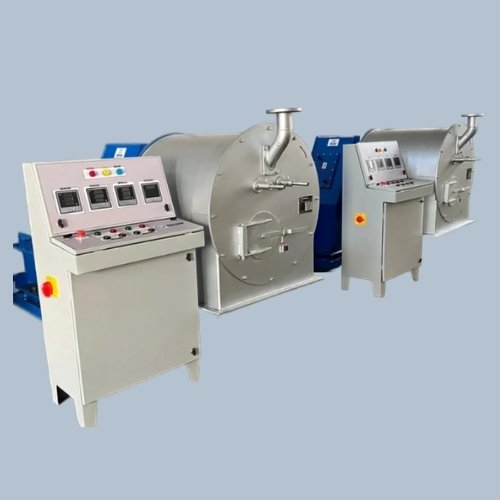
The Advantage: Our pusher centrifuges integrate seamlessly with PLC (Programmable Logic Controller) systems. You can monitor feed rates, vibration levels, and hydraulic pressure in real-time, allowing for a “lights-out” operation that significantly reduces human error.
Manufacturer’s Insight: When upgrading your chemical separation line, always evaluate the “Total Lifetime Value” of the machine. A cheaper machine might seem appealing today, but a Pusher Centrifuge designed with the right materials and automation will save you thousands in manual labor and maintenance downtime over the next decade.
Export Countries
We proudly manufacture and export to customers across domestic and international markets. Our export markets include:
-
Turkey
-
Bangladesh
-
Philippines
-
Thailand
-
Sri Lanka
-
Tanzania
-
Uganda
-
Indonesia
-
Egypt
-
Iran
-
Ghana
We ensure secure packaging, timely delivery, and reliable export documentation for international customers.
Conclusion
For the chemical industry, the Pusher Centrifuge is more than just a piece of equipment—it is a competitive advantage. If your current process is hampered by batch inefficiencies or inconsistent purity, it may be time to evaluate how a continuous separation strategy could transform your production.
Are you ready to optimize your chemical separation process?
Contact the engineering team at Shreeji Engineers today. We have extensive experience designing centrifuge solutions for the fine chemical, agrochemical, and pigment sectors. Let’s discuss how we can increase your yield and lower your operational costs.

 Users Today : 9
 Users This Month : 170
 Total Users : 1078