
Table of Contents
For many industries—particularly in salt, fertilizer, and chemical processing—the final moisture content of your solid cake is a key performance indicator. High moisture content doesn’t just lower the quality of your final product; it increases energy costs in downstream drying processes and can lead to storage and transportation challenges.
At Shreeji Engineers, we often analyze performance data to help our clients squeeze the best possible results out of their existing equipment. If your centrifuge is producing a “wet” cake, here are five process adjustments that can help you achieve a drier output.
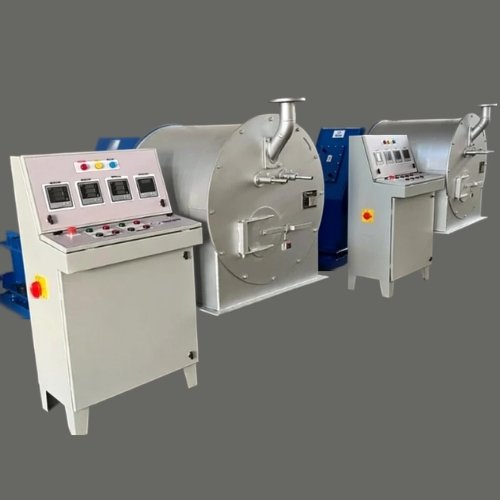
1. Optimize the Feed Concentration
The most common cause of high moisture is an inconsistent or overly dilute feed. If your slurry is too thin, the centrifuge has to work much harder to separate the liquid, often resulting in a shorter residence time for the solids.
-
The Strategy: Aim for a stable, high-solids concentration in your feed. A consistent feed density allows the centrifuge to maintain a steady, uniform cake thickness, which is essential for efficient drainage.
2. Adjust the Pusher Stroke and Frequency
The pusher stroke pushes the cake toward the discharge end. If the stroke frequency is too high, the solids are pushed out of the basket before they have had enough time to drain properly.
-
The Strategy: Experiment with the pusher cycle time. By slightly reducing the frequency (increasing the residence time), you allow the centrifugal force to act on the solids for a few seconds longer, resulting in significantly lower residual moisture.
3. Verify Filter Screen "Blinding"
If your filter screen segments are clogged (blinded) by fine particles, the filtrate cannot drain effectively. When the liquid path is blocked, it stays trapped within the cake until it reaches the discharge point.
-
The Strategy: Ensure you are using the correct slot width or mesh size for your specific particle size. If you notice persistent blinding, consult your manufacturer about upgrading to Genuine Precision-Engineered Screens designed for your specific material profile.
4. Utilize Counterflow Washing
If your process allows for it, implementing or optimizing a wash cycle can help in more than just purity. Proper washing removes impurities that might be holding onto moisture within the crystal structure.
-
The Strategy: Ensure the wash liquid is distributed evenly and that the pressure is set to avoid disturbing the cake structure. A well-managed wash cycle can actually improve the drainage characteristics of the cake.
5. Check the Basket Speed (G-Force)
Increased G-force generally leads to better separation. However, if the basket speed is too low, the centrifugal force will be insufficient to overcome the capillary forces holding the moisture inside the cake.
-
The Strategy: Review your current RPM settings against the original machine design. If your motor and drive system allow, a minor increase in basket speed can often provide the extra force needed to drop the moisture percentage by several points.
Manufacturer’s Insight: When optimizing for moisture, make changes incrementally. Change only one variable at a time—such as stroke frequency or feed rate—and record the output moisture for each change. This ensures you can identify the exact “sweet spot” for your specific slurry.
Export Countries
- Turkey
- Bangladesh
- Philippines
- Thailand
- Sri Lanka
- Tanzania
- Uganda
- Indonesia
- Egypt
- Iran
- Ghana
We ensure secure packaging, timely delivery, and reliable export documentation for international customers.
Conclusion
Reducing cake moisture is a balance of physics and process control. By fine-tuning your feed, residence time, and filtration media, you can significantly improve your plant’s efficiency and product quality.
Are you looking to optimize your plant’s separation performance?
Contact the engineering team at Shreeji Engineers today. We provide technical consulting for process optimization and can help you identify exactly which settings will give you the driest, most consistent output for your specific application.

 Users Today : 9
 Users This Month : 170
 Total Users : 1078