Automatic Pusher Centrifuge for Continuous Industrial Processing
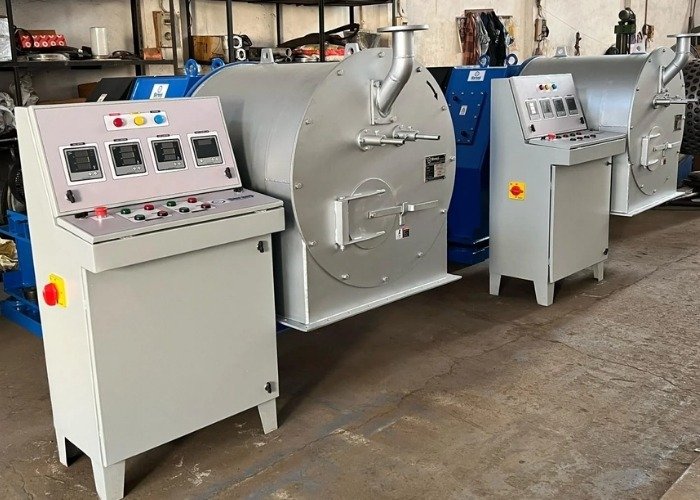
Shreeji Engineers manufactures and supplies Automatic Pusher Centrifuge Machines designed for continuous solid-liquid separation with coordinated feeding, centrifugal filtration, hydraulic cake movement and automatic solids discharge.
Automatic operation reduces repeated manual intervention during normal production by coordinating the main machine systems through electrical controls, timers, interlocks and selected automation components.
The control system can coordinate basket operation, hydraulic pusher movement, feed permissive logic, motor protection, alarm functions and other machine operations according to the selected configuration.
Automatic Pusher Centrifuge systems can be configured according to product characteristics, required production capacity, plant controls and automation requirements.
Automatic Pusher Centrifuge Enquiry
Key Features of Automatic Pusher Centrifuge
Designed to coordinate continuous filtration, hydraulic cake movement and solids discharge with configurable electrical and automation controls.
Continuous Operation
Supports continuous feeding, filtration, cake movement and solids discharge.
Automatic Sequencing
Machine functions can be coordinated according to the selected operating control system.
Hydraulic Integration
The hydraulic pusher system works together with machine controls during continuous production.
Safety Interlocks
Applicable interlocks can prevent selected machine functions during abnormal conditions.
Control Panel Options
Conventional electrical, PLC and HMI configurations can be selected according to project requirements.
Custom Automation
Control logic and plant integration can be engineered according to operating requirements.
What Does Automatic Operation Mean?
Automatic operation coordinates the major machine systems so the normal separation cycle can continue with reduced repetitive operator intervention.
An Automatic Pusher Centrifuge is designed so that basket rotation, slurry feeding, filtration, hydraulic cake transport and solids discharge can operate as part of a continuous production sequence.
Depending on the selected control package, electrical controls, timers, sensors, interlocks and optional PLC/HMI automation can coordinate individual machine functions.
The exact automation level depends on the machine configuration, plant control philosophy and customer requirements.
Automatic Continuous Operation
Feeding, centrifugal filtration, hydraulic pushing and cake discharge can occur continuously.
Process slurry enters the rotating basket while centrifugal force separates the liquid phase through the filtration screen.
The retained solids form a cake inside the basket. The hydraulic pusher performs repeated reciprocating movements that progressively transfer the cake toward the discharge section.
As separated solids leave the machine, fresh slurry can continue entering the filtration area. This allows continuous production without repeated batch unloading.
Automatic Machine Start-Up Sequence
A typical sequence coordinates machine readiness, rotor operation, hydraulic operation, feeding and continuous discharge.
System Ready
Electrical supply, safety conditions, feed arrangement and applicable machine interlocks are checked.
Rotor Start
The main rotor drive starts and the basket reaches the required operating condition.
Hydraulic Unit Start
The hydraulic power unit starts and prepares the pusher system for reciprocating operation.
Feed Enabled
When required operating conditions are satisfied, slurry feeding can begin.
Automatic Processing Sequence
Slurry Feeding
Process slurry enters the rotating filtration basket.
Filtration
Liquid passes through the filtration screen while solids remain inside the basket.
Pusher Cycling
The hydraulic system performs repeated strokes that move cake toward discharge.
Continuous Discharge
Separated solids leave the centrifuge while fresh slurry continues entering.
Available Control Panel Configurations
Control panel design can range from conventional electrical controls to project-specific PLC/HMI automation.
Standard Electrical Control
Conventional switches, relays, motor controls, protection devices and status indication.
PLC Control
Optional programmable sequence control for coordinated machine operation and alarm logic.
HMI Interface
Optional operator display for machine status, alarms and selected operating parameters.
Standard Control Functions
Exact control components should follow the approved electrical panel configuration supplied with the machine.
Main Power Control
Provides electrical isolation and distribution for machine operating systems.
Rotor Motor Control
Controls starting and stopping of the main basket rotor drive.
Hydraulic Motor Control
Controls operation of the hydraulic power unit and pusher system.
Motor Protection
Electrical protection devices help protect drives against applicable overload conditions.
PLC-Controlled Automatic Operation
PLC control can be provided where coordinated sequence logic, alarms and plant integration are required.
Automatic Start Sequence
Coordinates selected machine systems during production start-up.
Controlled Stop Sequence
Coordinates machine functions during normal production shutdown.
Interlock Logic
Prevents selected functions unless required machine conditions are satisfied.
Alarm Handling
Selected abnormal machine conditions can be identified through control logic.
Feed Permissive Logic
Feed can be permitted only when applicable machine conditions are healthy.
Plant Integration
External control signals can be engineered according to project requirements.
Optional HMI Control Functions
Where selected, an HMI can provide a visual interface for machine monitoring and selected operator controls.
Machine Status
Displays applicable equipment running, stopped or fault conditions.
Alarm Display
Provides visual identification of configured machine alarms and interlocks.
Pusher Cycle Status
Applicable pusher operation information can be displayed when corresponding controls are configured.
Selected Parameter Settings
Authorized operating parameters can be made adjustable according to the programmed system.
Automatic Machine Monitoring Options
Sensors can be added according to machine safety, process monitoring and automation requirements.
Motor Status
Running or fault signals can be monitored according to panel configuration.
Hydraulic Status
Hydraulic system operating condition can be integrated into control logic.
Pressure Monitoring
Hydraulic pressure monitoring can be added where required by the project.
Temperature Monitoring
Selected hydraulic or machine temperature conditions can be monitored.
Vibration Monitoring
Vibration monitoring can be offered where suitable instrumentation is included in the supplied package.
Speed Confirmation
Rotor speed confirmation can be integrated where required for sequence logic.
Sensors, Interlocks & Safety Provisions
Interlocks can prevent selected machine operations when required operating conditions are not satisfied.
Feed Interlock
Feed can be prevented until applicable rotor, hydraulic and safety conditions are satisfied.
Motor Overload Protection
Electrical motor protection can stop or inhibit machine functions during an overload condition.
Emergency Stop
Emergency stop devices provide a means to initiate shutdown during an unsafe condition.
Hydraulic Fault Interlock
Applicable hydraulic faults can prevent normal pusher operation where corresponding monitoring is installed.
Automatic Feed Control Arrangements
Feed control can be configured according to the plant piping arrangement and selected automation package.
Manual Valve
Simple feed regulation for applications where manual flow adjustment is suitable.
Motorized Valve
Motorized valve control can be integrated with automatic machine logic where required.
Feed Pump Control
Feed pump signals can be coordinated with machine operating permissives.
Automatic Controls & Hydraulic Pusher System
Rotor operation, hydraulic pushing and process feeding must operate together during continuous separation.
The rotor system generates centrifugal force while the hydraulic system produces reciprocating movement of the pusher.
Automatic controls coordinate these functions so that the pusher operates during the required machine conditions.
Depending on the selected automation package, hydraulic motor status, pressure condition, oil temperature, pusher timing and applicable fault conditions can be included in the machine control logic.
Manual & Automatic Control Modes
Where provided, separate operating modes can support maintenance, commissioning and normal production.
Manual Mode
Individual machine functions can be operated for maintenance, testing and commissioning according to control permissions.
Automatic Mode
Normal production functions are coordinated according to the configured operating sequence.
Operator Supervision
Operators continue monitoring production, machine condition and applicable alarms.
Available Automation Options
Control systems can be engineered according to the customer's plant and production requirements.
Electrical Control Panel
Conventional electrical controls for machine operation.
PLC Automation
Programmable sequence logic for project-specific control.
HMI Operator Panel
Visual monitoring and selected control functions.
Remote Signals
Selected machine status and command signals can be integrated.
SCADA / DCS Interface
Project-specific plant communication can be engineered where required.
Additional Sensors
Optional monitoring points can be added according to application requirements.
Automatic Pusher Centrifuge Motor Specifications
Motor ratings vary according to machine size. Final electrical and automation specifications should be confirmed for the selected model.
| Model | Basket Diameter | Hydraulic Motor | Rotor Motor |
|---|---|---|---|
| HT-250 | 275 mm | 5 HP | 7.5 HP |
| HT-350 | 375 mm | 7.5 HP | 10 HP |
| HT-450 | 475 mm | 10 HP | 15 HP |
| HT-550 | 575 mm | 15 HP | 25 HP |
| HT-650 | 675 mm | 20 HP | 30 HP |
| HT-750 | 755 mm | 25 HP | 40 HP |
| HT-850 | 855 mm | 30 HP | 60 HP |
| HT-950 | 955 mm | 40 HP | 60 HP |
| HT-1050 | 1055 mm | 50 HP | 70 HP |
Benefits of Automatic Operation
Automatic operation supports continuous industrial processing while reducing repetitive manual control actions.
Continuous Processing
Filtration and discharge can continue without repeated batch unloading.
Reduced Manual Intervention
Routine machine functions can be coordinated automatically.
Repeatable Sequence
Configured control logic supports a consistent operating procedure.
Machine Monitoring
Status and alarm information can be available according to configuration.
Protection Integration
Motor protection and interlock logic can be integrated into controls.
Plant Integration
Optional signals and communication can connect with plant controls.
Automatic Pusher Centrifuge Manufacturer in India
Shreeji Engineers manufactures Pusher Centrifuge systems with application-specific electrical and automation configurations.
Automatic Pusher Centrifuge Frequently Asked Questions
1. What is an Automatic Pusher Centrifuge?
An Automatic Pusher Centrifuge is a continuous filtration centrifuge in which major machine operations such as basket rotation, hydraulic cake movement and solids discharge are coordinated through an electrical control system.
2. Does automatic operation mean no operator is required?
No. Automatic operation reduces repetitive manual intervention, but operators should still supervise machine condition, alarms and process performance.
3. Is PLC control standard?
PLC control should be confirmed for the selected machine. It can be supplied as part of a project-specific automation package.
4. Is an HMI available?
An HMI can be provided where the selected automation configuration requires operator visualization and controls.
5. Can feed be controlled automatically?
Yes, where suitable valves, pump controls, signals and control logic are included in the project.
6. Can the centrifuge connect with SCADA or DCS?
SCADA or DCS communication can be engineered as a project-specific option where compatible controls and communication requirements are defined.
7. What safety functions can be included?
Depending on configuration, controls may include emergency stop, motor protection, electrical interlocks, feed permissives and selected sensor-based alarms.
8. What details are required for an automation quotation?
Share the required capacity, product details, plant electrical supply, preferred control type, PLC/HMI requirements, sensors, feed control and plant communication requirements.
Explore Our Pusher Centrifuge Range
Need an Automatic Pusher Centrifuge?
Share your product details, required production capacity and automation requirements with Shreeji Engineers. Our team can help you select a suitable machine and control configuration for your industrial process.

 Users Today : 9
 Users This Month : 170
 Total Users : 1078