Chemical Pusher Centrifuge for Continuous Crystalline Separation
Shreeji Engineers manufactures and supplies Chemical Pusher Centrifuge Machines for continuous solid-liquid separation of suitable crystalline chemical products.
Chemical applications can vary significantly in crystal size, feed concentration, mother liquor composition, corrosiveness, cake permeability and operating temperature.
For this reason, machine selection should be based on the actual process rather than production capacity alone.
Basket size, filtration screen, material of construction, hydraulic configuration and process arrangement can be selected according to chemical compatibility and separation requirements.
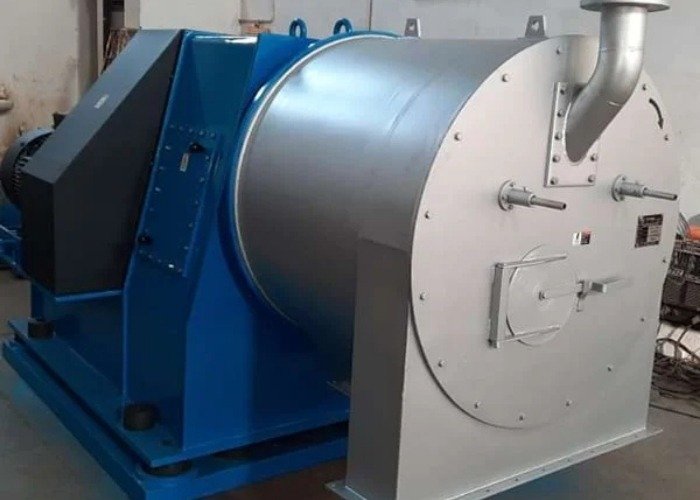
Chemical Pusher Centrifuge Enquiry
Key Considerations for Chemical Pusher Centrifuge
Machine configuration should be selected according to crystal behaviour, slurry properties, material compatibility and required continuous production capacity.
Chemical Compatibility
Construction materials should be selected according to the actual process chemicals and mother liquor.
Crystal Characteristics
Crystal size, shape and particle distribution influence filtration and screen selection.
Screen Selection
Filtration screen configuration is selected according to particle retention and cake behaviour.
Corrosion Resistance
Stainless steel and higher alloy materials can be considered for demanding chemical environments.
Cake Washing
Washing arrangements can be evaluated where mother liquor removal or purification is required.
Continuous Processing
Suitable applications can support continuous feeding, filtration and cake discharge.
Continuous Chemical Solid-Liquid Separation
Chemical production often requires separation of crystalline solids from liquid after reaction, crystallization or purification.
Chemical manufacturing frequently involves separation after reaction, crystallization, precipitation, neutralization, cooling or concentration.
Where the solids form a sufficiently permeable and filterable cake, a Pusher Centrifuge can provide continuous filtration and solids discharge.
Slurry enters the rotating basket, liquid passes through the filtration screen and the retained cake is progressively moved toward discharge by the hydraulic pusher.
Applications Involving Crystalline Chemical Products
Pusher centrifugation is primarily considered for chemical products that form filterable crystalline or granular solids.
Inorganic Salts
Suitable crystalline salt products can be evaluated for continuous dewatering.
Organic Chemical Crystals
Selected organic crystalline products may be suitable depending on solvent and filtration behaviour.
Fine Chemical Intermediates
Product recovery and cake washing requirements can be considered during selection.
Specialty Chemicals
Application-specific crystalline products can be evaluated from actual process data.
Fertilizer Products
Selected crystalline fertilizer materials can be evaluated for continuous separation.
Process Intermediates
Filterable crystalline intermediates can be considered according to slurry behaviour.
Feed Slurry Properties & Separation Requirements
Slurry characteristics directly influence machine capacity, screen selection and cake formation.
Solids Concentration
Feed solids percentage affects cake formation rate and required machine loading.
Crystal Size
Particle size influences screen opening, filtration rate and product retention.
Mother Liquor
Corrosion, viscosity, solvent content and temperature of the liquid phase should be evaluated.
Feed Rate
Feed flow should remain compatible with available filtration area and cake discharge capacity.
Why Crystal Characteristics Matter
Crystal structure and particle-size distribution have a direct effect on cake permeability and separation performance.
Average Crystal Size
Larger and well-defined crystals generally form a different cake structure from very fine particles.
Particle Distribution
Broad particle distribution may influence screen blinding and product retention.
Crystal Shape
Particle shape can affect packing, permeability and cake movement.
Crystal Strength
Fragile crystals may require careful consideration of feed and mechanical handling conditions.
Cake Compressibility
Highly compressible cakes may reduce liquid flow through the filtration layer.
Cake Permeability
Permeability determines how readily liquid can pass through the formed cake.
Chemical Compatibility & Material Selection
Material should be selected from actual chemical composition, concentration, temperature and corrosion conditions.
SS 304
Suitable for selected chemical services where process media is compatible.
SS 316
Improved corrosion resistance for suitable chemical process conditions.
SS 316L
Available where compatible with the process liquid, temperature and cleaning environment.
SS 904L
Can be considered for selected demanding corrosion conditions.
Duplex Stainless Steel
Available for selected processes requiring higher corrosion resistance.
Special Alloy Options
Higher corrosion-resistant alloys can be evaluated for demanding chemical media.
Corrosion Resistance Evaluation
Chemical compatibility should be reviewed before finalizing product-contact material.
Chemical Concentration
Material behaviour may change significantly with process chemical concentration.
Operating Temperature
Higher temperatures can alter corrosion rate and material compatibility.
pH & Chlorides
pH and chloride concentration can be important factors for stainless steel selection.
Cleaning Chemicals
Material should also be compatible with cleaning fluids used during maintenance.
Chemical Filtration Screen Selection
Screen configuration should balance product retention, filtration rate and cake formation.
Minimum Crystal Size
Screen opening should be selected according to the smallest relevant particle fraction.
Product Retention
Correct screen selection helps reduce unwanted product loss through filtrate.
Filtration Rate
Screen configuration should support acceptable liquid removal.
Screen Blinding
Fine particles can reduce filtration performance by blocking screen openings.
Screen Support
Screen support should match machine design and operating conditions.
Replacement Access
Screen inspection and replacement requirements should be considered during maintenance planning.
Cake Formation & Continuous Solids Discharge
As slurry enters the basket, crystalline solids form a cake on the filtration screen.
The hydraulic pusher advances this cake progressively toward the solids discharge section.
Stable continuous operation requires the cake formation rate to remain compatible with cake advancement and discharge.
Chemical Cake Washing & Purification Requirements
Wash Liquid Type
Washing liquid should be compatible with product-contact materials and seals.
Wash Quantity
Required wash quantity depends on cake thickness and purification target.
Product Solubility
Solubility should be considered to avoid unnecessary product losses during washing.
Purity Requirement
Washing arrangement should be evaluated against required mother liquor displacement.
Filtrate & Mother Liquor Handling
Separated liquid can require recovery, recycle, purification or effluent treatment depending on the process.
Process Recycle
Mother liquor can be routed back to the process where required.
Solvent Recovery
Solvent-containing filtrate can be directed to suitable recovery systems.
Separate Filtrate Streams
Mother liquor and wash filtrate can be managed separately where required.
Further Processing
Filtrate can be directed to downstream purification or process equipment.
By-Product Recovery
Valuable liquid streams can be recovered according to process requirements.
Effluent Handling
Non-recoverable filtrate can be routed to appropriate treatment systems.
Continuous Chemical Process Integration
The centrifuge can be positioned between upstream crystallization and downstream solids handling equipment.
Reactor / Crystallizer
Crystalline slurry is generated in the upstream chemical process.
Slurry Feed
Process slurry is transferred to the Pusher Centrifuge.
Centrifugal Separation
Liquid is separated while the crystalline cake forms and advances.
Downstream Handling
Cake can be transferred to a dryer, receiver, conveyor or further process.
Chemical Pusher Centrifuge Production Capacity
Actual capacity depends on process behaviour and should not be treated as one fixed value for every chemical.
Throughput depends on crystal size, feed solids concentration, filtration rate, cake permeability, mother liquor viscosity, temperature and required final moisture.
Cake washing requirements and screen configuration can also influence practical production capacity.
A reference capacity measured with one product should therefore not automatically be applied to a different chemical slurry.
Chemical Application Evaluation Table
This table shows the type of process information considered during Chemical Pusher Centrifuge selection.
| Chemical Application Type | Important Characteristics | Machine Considerations |
|---|---|---|
| Inorganic Crystalline Salts | Crystal size, chloride level, cake permeability | Screen selection, corrosion resistance, capacity |
| Organic Chemical Crystals | Solvent, crystal fragility, temperature | Material compatibility, sealing, product recovery |
| Fine Chemical Intermediates | Product value, particle distribution, purity | Product retention, washing, cleaning access |
| Fertilizer-Related Crystals | Throughput, crystal size, abrasive nature | Basket size, wear considerations, continuous discharge |
| Acidic Chemical Processes | Acid concentration, temperature | Corrosion-resistant material selection |
| Alkali-Containing Processes | pH, concentration, temperature | Material and seal compatibility |
| Solvent-Based Crystalline Products | Solvent type, flash point, vapour behaviour | Material, seals, electrical and containment evaluation |
Chemical Solvent-Handling Considerations
Solvent applications require evaluation of the complete machine and plant safety configuration.
Solvent Type
Solvent chemistry should be reviewed against material and seal compatibility.
Flash Point
Flammable solvent service requires appropriate plant and electrical safety evaluation.
Vapour Behaviour
Vapour generation may influence enclosure, ventilation and containment requirements.
Electrical Area
Electrical equipment suitability should match the plant's applicable area requirements.
Maintenance in Demanding Chemical Environments
Chemical exposure and abrasive crystalline products can increase maintenance demands on selected machine components.
Screen Inspection
Screens should be checked for wear, blinding, damage and corrosion.
Corrosion Inspection
Product-contact areas should be monitored for pitting, surface attack and localized corrosion.
Hydraulic Maintenance
Oil, filters, hoses, seals and hydraulic pressure should be inspected routinely.
Seal Inspection
Chemical exposure can affect seal condition and should be monitored.
Mechanical Inspection
Bearings, fasteners and rotating components should be checked according to service intervals.
Cleaning
Product buildup should be controlled according to process and maintenance requirements.
Abrasive Chemical Product Considerations
Some crystalline chemical products can be abrasive and may increase wear on screens, feed areas and discharge components.
Abrasive service should therefore be considered during machine selection and maintenance planning.
Inspection frequency and component replacement schedules may need to be adjusted according to actual wear behaviour.
How We Evaluate a Chemical Application
Machine selection follows a process-based evaluation rather than capacity selection alone.
Understand Product
Review chemical identity, crystal characteristics and production requirement.
Evaluate Slurry
Assess solids concentration, mother liquor, viscosity and temperature.
Check Compatibility
Review process liquids against proposed construction material and seals.
Evaluate Filtration
Assess cake permeability, product retention and screen requirements.
Review Washing
Determine whether cake washing is required and evaluate wash-liquid compatibility.
Finalize Configuration
Select basket size, material, screen, hydraulic system and process integration.
Chemical Pusher Centrifuge Manufacturer in India
Machine configuration is developed according to chemical compatibility, filtration behaviour and process requirements.
Chemical Pusher Centrifuge Frequently Asked Questions
1. What is a Chemical Pusher Centrifuge?
A Chemical Pusher Centrifuge is a continuous filtration centrifuge used to separate suitable crystalline chemical solids from a liquid phase using centrifugal force and a reciprocating pusher mechanism.
2. Can a Pusher Centrifuge handle every chemical slurry?
No. Suitability depends on crystal size, filtration behaviour, cake permeability, chemical compatibility, feed concentration and actual process conditions.
3. How is construction material selected?
Material is selected according to the chemical product, mother liquor, solvent, concentration, temperature, cleaning chemicals and corrosion conditions.
4. What materials are available?
Depending on project requirements, materials may include SS 304, SS 316, SS 316L, SS 904L, Duplex stainless steel and other corrosion-resistant materials.
5. Why is crystal size important?
Crystal size influences screen selection, filtration rate, cake permeability and product recovery.
6. Can the filter cake be washed?
Cake washing arrangements can be evaluated where the process requires removal of mother liquor or soluble impurities.
7. Can the centrifuge handle solvents?
Solvent applications require evaluation of material compatibility, seals, electrical requirements, vapour handling and plant safety.
8. What determines production capacity?
Throughput depends on crystal size, solids concentration, filtration behaviour, viscosity, cake permeability, washing requirements and required final cake moisture.
9. What information is required for machine selection?
Provide product name, crystal size, feed concentration, mother liquor, temperature, required capacity, cake moisture, washing requirements and preferred material of construction.
Explore Our Pusher Centrifuge Range
Need a Chemical Pusher Centrifuge for Your Process?
Share your chemical product, crystal size, feed concentration, mother liquor, temperature, required capacity, cake moisture, washing requirement and preferred material of construction with Shreeji Engineers.

 Users Today : 9
 Users This Month : 170
 Total Users : 1078